
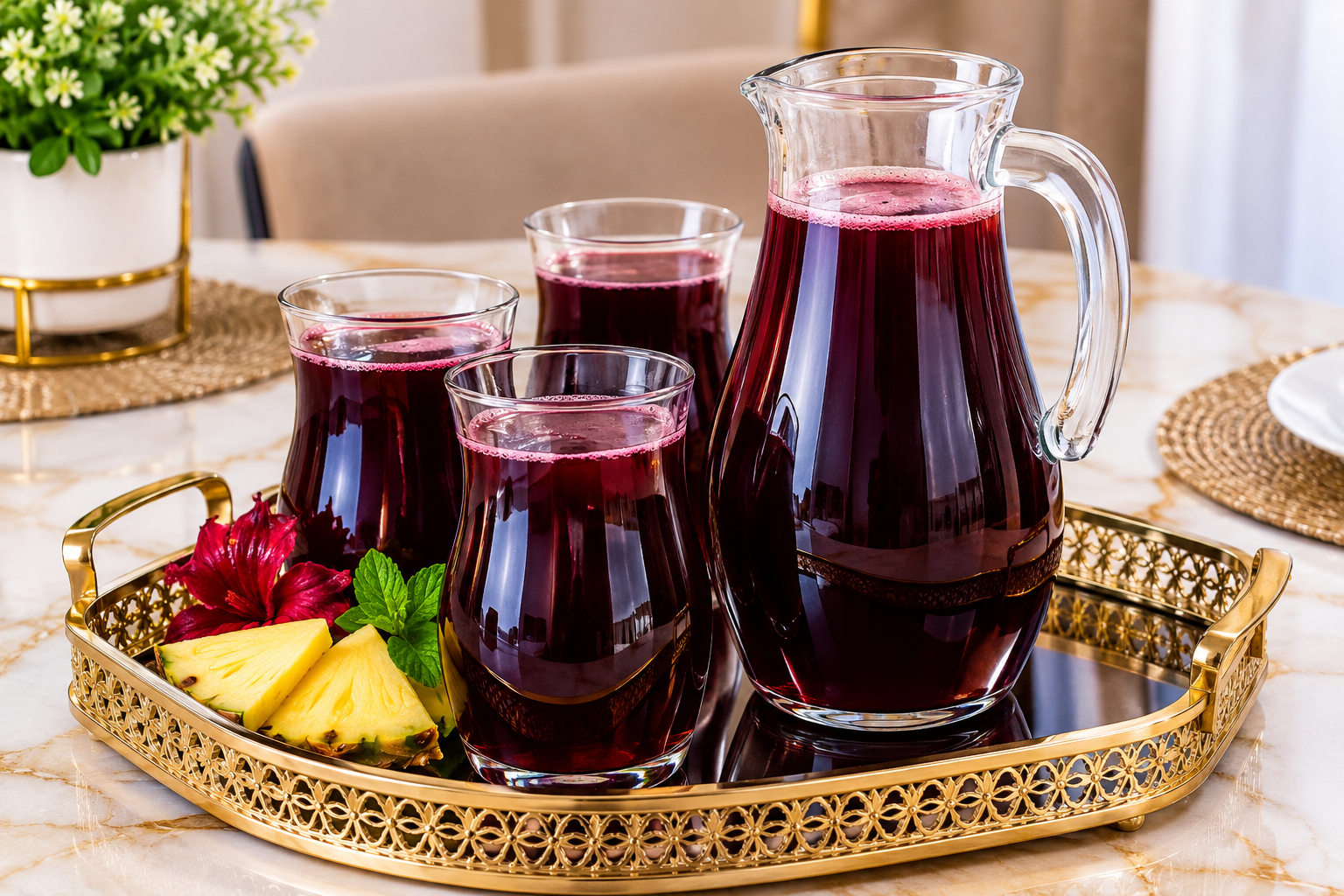
Healthy Homemade Nigerian Zobo Drink Recipe with Pineapple, Ginger and Cloves
Medical Disclaimer: The information on EatSmartNaija is for educational purposes only and does not replace professional medical advice. Read our full Medical Disclaimer page here.
There is something refreshing about a cold bottle of zobo on a hot Nigerian afternoon. It is one of those drinks I never find difficult to recognise—the deep red colour, the slightly sharp hibiscus taste and that familiar kick from ginger all come together so well.
I decided to make this homemade version because I wanted a zobo that tasted fresh and fruity without having to make it overly sweet. When I prepare it this way, the pineapple gives the drink a lovely natural flavour, while the ginger adds just enough warmth.
The good thing about making zobo at home is that I get to control what goes into it. I can decide how much sweetener to use, how strong I want the ginger, and whether I want the pineapple flavour to stand out.
This is the version I’m sharing with you today: a simple Nigerian zobo drink made with hibiscus leaves, fresh pineapple, ginger and a little cloves.
Why I Like This Homemade Zobo
What I like most about making zobo myself is the freedom to adjust the flavour to my taste.
I really don’t have to make it extremely sweet for it to taste good. The pineapple gives it a fruity taste, the ginger gives it that familiar zobo kick, and the cloves add a mild spicy note.
If you prefer a more tart drink, you can use less sweetener. If you love pineapple, you can allow that flavour to come through more strongly. Or you can do a mix of flavors like bannana and vanilla to bring out a juicy taste.
Ingredients You’ll Need
For about 6–8 glasses, I use:
- 2 cups dried zobo leaves (hibiscus calyces)
- 2 litres clean water
- 1 medium ripe pineapple
- 1 large thumb-sized piece of fresh ginger
- 1 teaspoon cloves (konafuru), optional
- ½ cup soft dates, pitted and blended, or up to 3 tablespoons honey
- Ice cubes, for serving, optional
Note:
Dates and honey can both add sweetness and calories, so I prefer to start with a small amount and add more only if necessary.
You can also leave the sweetener out if you enjoy your zobo with a stronger, more natural tartness.

How to Make Homemade Nigerian Zobo Drink
Step 1: Sort and Rinse the Zobo Leaves
The first thing I normally do is spread the dried zobo leaves out and check them carefully. I remove any stones, sticks or other unwanted particles inside the leaves.
I then put the leaves in a clean colander and rinse them thoroughly under running water.
I don’t leave them soaking for a long time. A good rinse is enough to remove dust and other particles before cooking.
Step 2: Prepare the Pineapple and Ginger
Wash the pineapple thoroughly before cutting it.
After peeling it, cut the flesh into chunks and keep some of the clean peel for the cooking process. I like doing this because it gives the zobo an even stronger pineapple aroma.
The next thing, is to peel the ginger and crush or blend it.
The cloves are optional. As for me, I use them, because I only want a mild spicy flavour.
Step 3: Combine Everything in the Pot
Put the rinsed zobo leaves into a large clean pot and add the pineapple chunks, clean pineapple peel, ginger and cloves.
Then pour in the 2 litres of water.
Make sure your pot is large enough to leave some room at the top because the mixture will boil.
Step 4: Boil and Simmer
Place the pot over medium-high heat and bring everything to a boil.
Once it starts boiling, reduce the heat, cover the pot and let it simmer for about 25–30 minutes.
As it cooks, the water becomes a deep red colour and the flavours from the pineapple, ginger and cloves begin to come together.
Don’t rush this part because allowing the ingredients to simmer gives the drink a fuller flavour.
Step 5: Allow It to Cool
After cooking, take the pot away from the heat and allow the zobo to cool.
I prefer not to strain and sweeten it while it is still very hot. Allowing it for some time to cool makes the next steps easier.
Step 6: Strain the Zobo
Place a fine-mesh sieve over a large clean bowl or jug and pour the zobo through it.
Gently press the pineapple pieces to get out some of the remaining liquid, but don’t squeeze everything too aggressively because is better when the finished drink is fairly smooth.
Once everything is strained, discard the leaves, pineapple peel and other solids.
Step 7: Add Your Sweetener
For me I like using dates, I first remove the seeds and blend the dates with a little clean water until it becomes smooth.
I then stir the date paste into the zobo.
If I use honey instead, I add it gradually and stir well.
This is the part where I recommend tasting as you go. Don’t try to make the zobo extremely sweet. I like being able to taste the pineapple, ginger and hibiscus.
Step 8: Chill and Serve
Once I’m happy with the taste, I pour the zobo into clean, covered bottles or containers and put it in the refrigerator.
I like serving it really cold, sometimes with a few ice cubes.
For a simple presentation, you can add a small pineapple wedge or a thin slice of lemon to the glass.
How I Make My Zobo Less Sweet
One thing I’ve learnt from making homemade zobo is that you don’t need a lot of sweetener to get a good-tasting drink.
I usually start with a small amount and taste the drink before deciding whether it needs more.
If you’re trying to reduce your sugar intake, you can use little or no added sweetener. Just remember that pineapple and dates naturally contain sugar too.
For me, the best zobo is one where the hibiscus and pineapple can still be tasted instead of being covered up by sweetness.
Can Zobo Help With Weight Loss?
I wouldn’t describe zobo as a weight-loss drink or a treatment for weight loss.
However, if you normally drink very sweet soft drinks, choosing a homemade zobo with little or no added sweetener can be one simple way to reduce how much added sugar you drink.
What matters most is your overall eating and drinking pattern. A single drink cannot cause weight loss on its own.
If you’re making this zobo as part of a weight-management plan, keep the added sweetener modest and pay attention to your overall portions.
What About Zobo and Blood Pressure?
Study shows that hibiscus has possible effect on blood pressure, and some research has reported blood-pressure-lowering effects.
However, that does not mean that homemade zobo should be used to treat high blood pressure. Different studies have used different hibiscus preparations and amounts.
If you have low blood pressure or take medication for blood pressure, it is a good idea to speak with your doctor or pharmacist before regularly drinking concentrated hibiscus preparations.
Zobo should not be used as a replacement for prescribed blood-pressure medication.
A Note for Pregnant Women
If you are pregnant or a breastfeeding mother, speak with your doctor or another qualified healthcare professional before regularly consuming concentrated hibiscus preparations.
There is limited reliable information about the safety of medicinal or concentrated hibiscus preparations during pregnancy, so it is better to get professional advice rather than assume that more is always better.
This recipe is a food and drink recipe, not a pregnancy remedy or treatment.
How to Store Homemade Zobo
After making the zobo, transfer it into clean, covered bottles or containers and refrigerate it.
For this homemade drink, I recommend aiming to finish it within 3–4 days when properly refrigerated.
Don’t leave the finished zobo sitting at room temperature for long periods.
If you notice an unusual smell, appearance or taste, discard it rather than trying to save it.
Frequently Asked Questions
Can I make zobo without sugar?
Yes. You can make zobo without adding sugar, honey or dates. The pineapple will still contribute some natural sweetness, although the finished drink will have a more noticeable tart flavour.
Is homemade zobo good for weight loss?
Homemade zobo can fit into a weight-management eating pattern, especially when little or no sweetener is added. However, drinking zobo does not automatically cause weight loss.
Can I use pineapple peel when making zobo?
Yes, but wash the pineapple thoroughly before peeling it. This helps remove dirt and other contaminants from the outside of the fruit. Use clean peel and discard it after cooking and straining.
Can I use honey instead of dates?
Yes you can. Honey can be used instead of blended dates. Add it gradually and taste the zobo as you go so you don’t make it unnecessarily sweet.
Can I leave out the cloves?
Absolutely. Cloves are optional. If you prefer a simpler pineapple-and-ginger flavour, you can leave them out.
How long can homemade zobo stay in the refrigerator?
For this homemade version, keep it covered and refrigerated and aim to consume it within 3–4 days. If you notice signs of spoilage, discard it.
Final Thoughts
Making zobo at home is actually quite simple once you get the balance of flavours right.
For me, the combination of hibiscus, ripe pineapple and fresh ginger gives the drink everything it needs. I don’t have to make it extremely sweet for it to be enjoyable.
The best part is that you can make it your own. Add more ginger if you like a stronger kick, increase the pineapple if you prefer a fruitier taste, or leave out the cloves if you want something simpler.
So, how do you like your zobo—more gingery, more fruity, or somewhere in between? Let me know in the comments.
